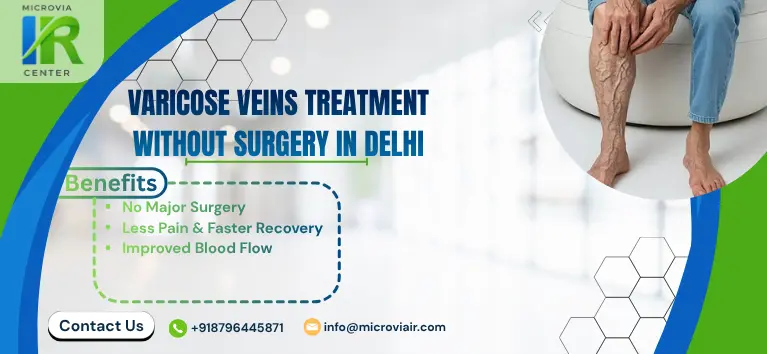
Varicose veins are enlarged, twisted veins that commonly develop in the legs when the valves inside the veins do not function properly. They may appear blue or purple beneath the skin and can cause heaviness, aching, swelling, itching, or discomfort, particularly after prolonged standing. Although some people consider varicose veins a cosmetic concern, they can sometimes indicate an underlying problem with blood circulation that requires medical evaluation.
For patients seeking Varicose Veins Treatment Without Surgery in Delhi, modern minimally invasive procedures offer alternatives to conventional vein surgery in suitable cases. These treatments aim to close or eliminate problematic veins through small punctures or injections, often without large incisions or general anaesthesia.
At Microvia IR Center, located at 3/13 (G.F.), Block 3, East Patel Nagar, Patel Nagar, New Delhi, Delhi 110008, patients can explore appropriate treatment options following an individual clinical assessment. The choice of treatment depends on symptoms, ultrasound findings, vein anatomy, medical history, and the severity of the condition.
Understanding the available procedures, their benefits, limitations, and recovery requirements can help patients make informed decisions about their vein health.
What Are the Symptoms, Causes, and Diagnosis of Varicose Veins?
Common Symptoms of Varicose Veins
Varicose veins can develop gradually, and symptoms may vary from one person to another. Some people notice visible veins without discomfort, while others experience symptoms that interfere with daily activities.
Common symptoms include:
- Enlarged, twisted, or bulging veins, particularly in the legs.
- Aching, heaviness, or tiredness after prolonged standing.
- Swelling around the ankles and lower legs.
- Itching, dryness, or skin irritation near affected veins.
- Night-time leg cramps or a burning sensation.
- Skin darkening or thickening around the ankles in advanced cases.
People searching for Varicose Veins Treatment Without Surgery in Delhi should seek medical advice if these symptoms persist, worsen, or affect their quality of life.
Sudden leg swelling, significant pain, warmth, or redness requires prompt medical assessment because these symptoms may indicate a blood clot or another urgent condition. Bleeding from a varicose vein also requires immediate attention.
What Causes Varicose Veins?
Healthy veins contain valves that help blood travel towards the heart. When these valves weaken or become damaged, blood can flow backwards and collect within the veins. This increases pressure and causes the veins to enlarge.
Several factors can increase the likelihood of developing varicose veins:
- Family history: Genetic factors can increase susceptibility to vein valve problems.
- Prolonged standing or sitting: Limited movement can affect blood circulation in the legs.
- Ageing: Vein walls and valves may weaken over time.
- Pregnancy and hormonal changes: These can increase pressure on the veins.
- Excess body weight: Additional pressure may affect circulation.
- Previous blood clots: Damage to deeper veins can contribute to chronic venous problems.
Not every person with these risk factors develops varicose veins. A clinical assessment helps determine whether symptoms are associated with superficial vein reflux, another vascular condition, or a different cause.
How Are Varicose Veins Diagnosed?
Diagnosis typically begins with a discussion of symptoms, medical history, previous treatments, and family history. A doctor examines the legs for enlarged veins, swelling, skin changes, and other signs of venous disease.
A venous Doppler ultrasound is commonly used to assess blood flow, identify faulty valves, and determine which veins are affected. This investigation helps establish whether a minimally invasive procedure is appropriate.
For patients considering Varicose Veins Treatment Without Surgery in Delhi, ultrasound findings are particularly important because visible veins alone do not reveal the full extent of the underlying problem.
The results help the treating specialist choose an appropriate treatment approach and explain its expected benefits, limitations, and possible risks.
What Are the Non-Surgical Treatment Options for Varicose Veins in Delhi?
Treatment depends on the severity of venous disease, the location and size of the affected veins, symptoms, ultrasound findings, and the patient’s overall health. Not every patient requires a procedure, and not every procedure is suitable for every vein.
Laser Vein Treatment
Laser vein treatment is a minimally invasive technique commonly performed as endovenous laser ablation (EVLA). A specialist inserts a thin catheter into the affected vein under ultrasound guidance and delivers controlled laser energy to close it.
Once the diseased vein is closed, blood is redirected through healthier veins. The body gradually absorbs the treated vein over time.
Potential advantages include:
- Small entry point rather than a large surgical incision.
- Usually performed under local anaesthesia.
- Shorter recovery compared with traditional vein stripping in suitable patients.
- Often completed as a day-care procedure.
Laser treatment is not appropriate for every type of varicose vein. The specialist must confirm that the affected vein’s anatomy and ultrasound findings support this approach.
Radiofrequency Ablation
Radiofrequency ablation (RFA) uses controlled heat generated by radiofrequency energy to close an affected vein. Like endovenous laser treatment, it is performed using a catheter and ultrasound guidance.
RFA and laser ablation are both established options for suitable patients with superficial venous reflux. The choice depends on vein anatomy, available expertise, equipment, and individual clinical considerations.
Sclerotherapy
Sclerotherapy involves injecting a medical solution or foam into selected veins to make them close. It may be appropriate for smaller varicose veins, certain tributary veins, or residual veins after another procedure.
Ultrasound-guided foam sclerotherapy can also be considered for selected larger veins, depending on the clinical situation.
Ambulatory Phlebectomy
Ambulatory phlebectomy involves removing selected superficial varicose veins through very small skin openings. It is less invasive than traditional vein stripping, although it is still a procedural intervention.
A specialist may recommend it alone or alongside endovenous treatment when the vein pattern makes this approach appropriate.
Conservative Management
Some patients can initially manage symptoms with non-procedural measures, including:
- Walking regularly to support circulation.
- Elevating the legs when resting.
- Avoiding prolonged periods of standing or sitting without movement.
- Maintaining a healthy body weight.
- Wearing compression stockings when advised by a clinician.
These measures may reduce discomfort and swelling, but they do not reliably eliminate established varicose veins or correct significant valve reflux.
For patients exploring Varicose Veins Treatment Without Surgery in Delhi, the goal is to select the least invasive approach that is clinically appropriate—not simply to choose a procedure because it is marketed as non-surgical.
What Happens During a Minimally Invasive Procedure?
The exact steps depend on the treatment selected. For endovenous laser or radiofrequency ablation, the usual process involves:
- Reviewing the Doppler ultrasound and confirming the treatment plan.
- Cleaning the skin and administering local anaesthesia where appropriate.
- Inserting a thin catheter into the affected vein under ultrasound guidance.
- Applying energy to close the targeted vein.
- Providing post-procedure instructions, including guidance on walking and compression if indicated.
The duration varies with the number of veins treated and the complexity of the condition. The specialist explains preparation, expected discomfort, follow-up, and potential complications before obtaining informed consent.
What Are the Benefits, Recovery Requirements, and Cost Factors?
Benefits of Minimally Invasive Treatment
For appropriately selected patients, minimally invasive procedures can provide meaningful improvements in symptoms and quality of life.
Potential benefits include:
- Smaller incisions: Many endovenous procedures require only a small puncture.
- Symptom improvement: Aching, heaviness, and swelling may improve when the underlying reflux is treated.
- Shorter recovery: Many patients resume routine activities sooner than after traditional surgery.
- Outpatient treatment: Many procedures do not require an overnight hospital stay.
- Improved vein appearance: Bulging veins may become less prominent over time.
Results vary between patients. Treatment cannot guarantee permanent prevention of new varicose veins, and complications such as bruising, inflammation, skin changes, nerve irritation, or blood clots can occur.
Recovery After Treatment
Recovery depends on the procedure, the extent of treatment, and the patient’s general health. Many patients can walk shortly after an endovenous procedure and return to light daily activities within a short period.
Your doctor may recommend regular walking, temporary compression stockings, and avoiding strenuous exercise or heavy lifting for a specified period. Follow-up appointments and ultrasound examinations may be advised to assess treatment success and check for complications.
Contact your treating team if you develop worsening pain, marked swelling, fever, or other unexpected symptoms. Chest pain or sudden breathlessness requires emergency medical care.
Varicose Veins Treatment Without Surgery in Delhi: Treatment Versus Traditional Surgery
The most appropriate approach depends on the underlying vein problem rather than the name of the procedure alone.
| Factor | Minimally invasive treatment | Traditional vein surgery |
| Technique | Catheter, injection, or small skin openings | Surgical incisions and vein removal or ligation |
| Anaesthesia | Often local, depending on the procedure | Depends on the operation |
| Recovery | Often shorter | May require a longer recovery |
| Suitability | Depends on vein anatomy and clinical findings | May be considered for selected cases |
| Follow-up | May include ultrasound monitoring | Follow-up depends on the operation |
Traditional surgery is not necessary for many patients, but it can still be appropriate in selected circumstances. A vascular specialist can explain the advantages and limitations of each option.
What Factors Affect Treatment Cost in Delhi?
The cost of Varicose Veins Treatment Without Surgery in delhi varies according to individual clinical requirements. A reliable estimate should be provided only after the relevant assessment and discussion of the proposed procedure.
Factors that may affect the total cost include:
- The number, size, and location of affected veins.
- The type of procedure recommended, such as laser ablation, radiofrequency ablation, or sclerotherapy.
- The complexity of the condition and whether more than one procedure is needed.
- Doppler ultrasound, consultation, and other necessary investigations.
- Anaesthesia, facility charges, compression garments, and follow-up care.
- The patient’s medical history and any additional treatment requirements.
Patients should request an itemised estimate and clarify what is included before proceeding. Treatment decisions should be based on clinical suitability, expected outcomes, and informed consent rather than price alone.
Frequently Asked Questions About Varicose Veins Treatment Without Surgery in Delhi
1. Can varicose veins be treated without surgery?
Yes. Depending on the patient’s condition, options include endovenous laser ablation, radiofrequency ablation, sclerotherapy, and ambulatory phlebectomy. Some patients may initially benefit from conservative management.
2. Is laser vein treatment safe?
Laser vein treatment is an established minimally invasive option when appropriately indicated and performed by trained professionals. As with any medical procedure, it carries potential risks, which should be discussed during consultation.
3. Is laser treatment painful?
Local anaesthesia is commonly used during endovenous laser ablation. Patients may experience temporary discomfort, bruising, or tightness afterwards, although individual experiences vary.
4. How long does recovery take after laser vein treatment?
Many patients resume light activities relatively quickly, sometimes within a day or two. Recovery depends on the extent of treatment, the patient’s health, and the clinician’s instructions.
5. Can varicose veins return after treatment?
Yes. A treated vein may reopen in some cases, and new varicose veins can develop over time. Follow-up care and management of contributing risk factors can help monitor long-term vein health.
6. Is Doppler ultrasound necessary before treatment?
Duplex Doppler ultrasound is commonly recommended to identify the affected veins and assess blood flow and valve function. These findings help guide treatment selection.
7. What is the cost of varicose vein treatment in Delhi?
The cost varies according to the procedure, number of veins involved, diagnostic investigations, and individual treatment requirements. A personalised estimate should be provided after clinical assessment.
8. Where can I consult for varicose vein treatment near me in Delhi?
Patients can contact Microvia IR Center, East Patel Nagar, New Delhi, to enquire about consultation and available treatment options. Suitability for any procedure must be determined by the treating specialist.
9. Does every patient with varicose veins need a procedure?
No. Some patients have mild symptoms that can be managed with lifestyle measures and medical guidance. Others may benefit from an intervention if symptoms, skin changes, or ultrasound findings warrant treatment.
Conclusion: Explore Personalised Varicose Vein Treatment in Delhi
Varicose veins can cause more than visible changes in the legs. Persistent discomfort, swelling, skin changes, and other symptoms deserve appropriate medical evaluation. Modern minimally invasive treatments—including laser and radiofrequency ablation—offer effective options for many patients, but the right choice depends on an accurate diagnosis.
If you are considering Varicose Veins Treatment Without Surgery in Delhi, start with a consultation and venous Doppler assessment when recommended. Understanding your condition helps you compare suitable treatments, recovery expectations, potential risks, and costs.
Book a consultation at Microvia IR Center to discuss your symptoms and explore appropriate treatment options.
- Clinic: Microvia IR Center
- Address: 3/13 (G.F.), Block 3, East Patel Nagar, Patel Nagar, New Delhi, Delhi 110008
- Phone: 087964 45871
Call 087964 45871 to enquire about an appointment and take an informed step towards better vein health.