
Bronchial Artery Embolization For Hemoptysis
- Home
- Bronchial Artery Embolization For Hemoptysis
Advanced Minimally Invasive Treatment for Coughing Blood (Hemoptysis)
Hemoptysis, or coughing up blood, can be a serious and potentially life-threatening condition caused by bleeding within the lungs or airways. Prompt diagnosis and treatment are essential to control bleeding and prevent complications.
Bronchial Artery Embolization (BAE) is an advanced minimally invasive procedure used to safely and effectively control lung bleeding without major surgery.
At our center, we provide expert image-guided Bronchial Artery Embolization performed by experienced interventional radiology specialists for rapid bleeding control and improved patient outcomes.
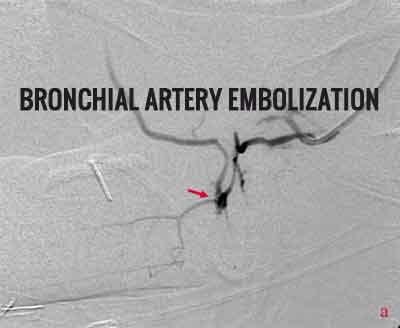
What is Hemoptysis?
Hemoptysis refers to coughing up blood from the lungs or respiratory tract. The amount of bleeding may vary from mild blood-streaked sputum to severe life-threatening bleeding.
Persistent or heavy bleeding requires immediate medical attention.
Common Causes of Hemoptysis
- Tuberculosis (TB)
- Bronchiectasis
- Lung infections
- Chronic lung disease
- Lung tumors
- Pneumonia
- Fungal infections
- Pulmonary vascular abnormalities
- Trauma or injury
Symptoms Associated with Hemoptysis
Patients may experience:
- Coughing up blood
- Chest discomfort
- Difficulty breathing
- Fever
- Weakness and fatigue
- Weight loss
- Recurrent chest infections
What is Bronchial Artery Embolization (BAE)?
Bronchial Artery Embolization is a minimally invasive image-guided procedure used to stop abnormal bleeding from the lungs.
During the procedure:
- A tiny catheter is inserted through a small puncture in the wrist or groin artery
- Advanced imaging is used to identify the bleeding vessel
- Special embolic materials are injected to block the abnormal blood vessels causing bleeding
This helps control hemoptysis quickly and effectively while preserving healthy lung tissue.
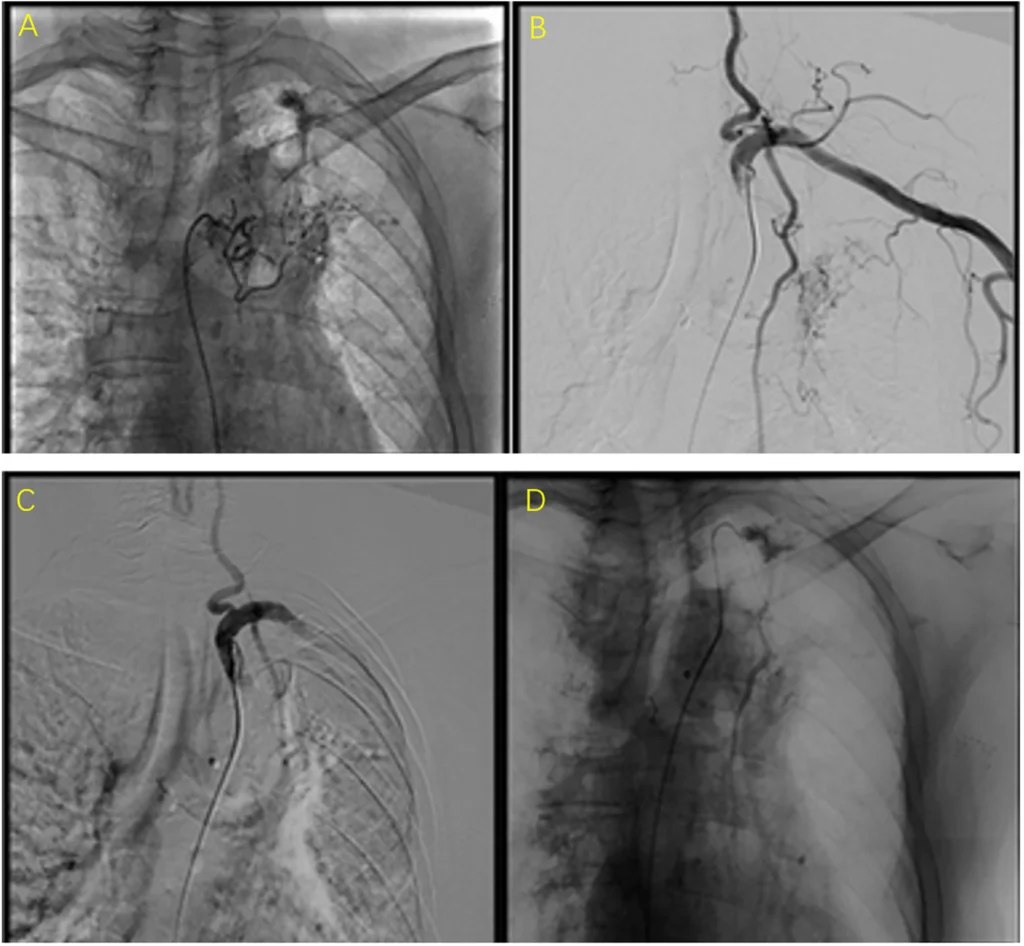
Benefits of Bronchial Artery Embolization
- Minimally invasive treatment
- No major surgery
- Rapid control of bleeding
- Faster recovery
- Minimal pain and scarring
- Short hospital stay
- Reduced risk of major complications
- Precise image-guided treatment
Who Needs BAE?
Bronchial Artery Embolization may be recommended for patients who have:
- Moderate to severe hemoptysis
- Recurrent lung bleeding
- Hemoptysis due to TB or bronchiectasis
- Bleeding not controlled by medications
- High surgical risk
- Lung bleeding requiring emergency treatment
How is the Procedure Performed?
Step 1 – Evaluation & Imaging
The patient undergoes CT scan, chest imaging, and clinical evaluation to identify the source of bleeding.
Step 2 – Catheter Placement
A tiny catheter is inserted into an artery under local anesthesia.
Step 3 – Identification of Bleeding Vessel
Advanced angiography is used to locate abnormal bronchial arteries.
Step 4 – Embolization
Special embolic particles or coils are used to block the bleeding vessels.
Step 5 – Recovery & Monitoring
Patients are monitored after the procedure to ensure bleeding control and stable recovery.
Diagnostic & Imaging Support
We use advanced imaging techniques including:
- CT Scan
- CT Angiography
- Chest X-Ray
- Bronchoscopy (when required)
- Angiography
These help identify the exact source of bleeding and guide treatment.
Recovery After BAE
Most patients recover well after the procedure. Recovery generally includes:
- Short hospital stay
- Mild temporary chest discomfort
- Monitoring for recurrence of bleeding
- Early return to daily activities
- Follow-up imaging when required
Our team provides complete post-procedure care and monitoring.
Why Choose Us?
- Experienced Interventional Radiology Specialists
- Advanced Image-Guided Lung Interventions
- Emergency Bleeding Management Expertise
- Minimally Invasive Treatment Approach
- Personalized Patient Care
- Focus on Safety & Faster Recovery