FNAC-Biopsy & Drainage Procedures
- Home
- FNAC-Biopsy & Drainage Procedures
Advanced Image-Guided Diagnostic & Drainage Procedures
FNAC, biopsy, and drainage procedures are important minimally invasive techniques used for accurate diagnosis and effective treatment of various medical conditions. These procedures help detect infections, tumors, fluid collections, and other abnormalities with precision and minimal discomfort.
At our center, we provide advanced image-guided FNAC, biopsy, and drainage procedures performed by experienced specialists using ultrasound and CT guidance for maximum safety and accuracy.
What is FNAC?
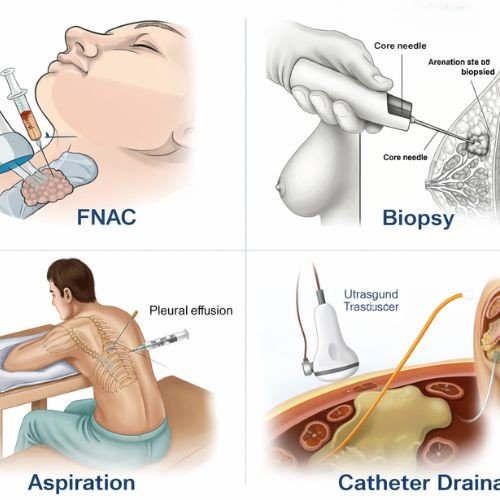
Fine Needle Aspiration Cytology (FNAC) is a minimally invasive diagnostic procedure in which a thin needle is used to collect cells from a lump, swelling, or suspicious area for laboratory examination.
FNAC helps diagnose:
- Thyroid nodules
- Lymph node swelling
- Breast lumps
- Soft tissue masses
- Neck swellings
- Other suspicious lesions
What is a Biopsy?
A biopsy involves removing a small tissue sample from an abnormal area to examine it under a microscope.
Image-guided biopsy helps diagnose:
- Tumors and cancers
- Liver lesions
- Lung nodules
- Kidney abnormalities
- Bone lesions
- Soft tissue masses
- Infections and inflammatory diseases
Biopsies provide accurate diagnosis and help guide the right treatment plan.
What are Drainage Procedures?
Drainage procedures are performed to remove abnormal fluid collections such as:
- Abscesses
- Pus collections
- Fluid accumulation
- Cysts
- Infected collections
Using imaging guidance, a small tube or needle is placed precisely into the affected area to drain the fluid safely and effectively.
Common Conditions Requiring FNAC, Biopsy & Drainage
We commonly perform these procedures for:
- Unexplained lumps or masses
- Suspected cancer
- Persistent infections
- Liver abscess
- Pleural effusion
- Abdominal collections
- Thyroid nodules
- Enlarged lymph nodes
- Organ lesions
- Post-surgical fluid collections
Image-Guided Procedures for Better Accuracy
Our procedures are performed under:
- Ultrasound Guidance
- CT Guidance
- Fluoroscopy Guidance (when required)
Image guidance helps improve precision, safety, and diagnostic accuracy while minimizing complications.
Benefits of Minimally Invasive Procedures
- No major surgery
- Small needle puncture only
- Accurate diagnosis
- Faster recovery
- Minimal pain and scarring
- Reduced hospital stay
- Lower risk of complications
- Quick return to daily activities
How are These Procedures Performed?
Step 1 – Evaluation & Imaging
The affected area is evaluated using imaging studies.
Step 2 – Local Anesthesia
The procedure site is numbed for patient comfort.
Step 3 – Needle or Catheter Placement
Using imaging guidance, the needle or drainage catheter is precisely inserted.
Step 4 – Sample Collection or Drainage
Cells, tissue, or fluid are collected safely for diagnosis or treatment.
Step 5 – Recovery & Observation
Patients are monitored briefly before discharge.
Most procedures are completed within a short duration.
Recovery After Procedure
Recovery is usually quick and comfortable. Patients may experience:
- Mild soreness at the puncture site
- Minimal discomfort
- Same-day discharge in many cases
- Early return to routine activities
Our team provides complete post-procedure instructions and follow-up care.
Why Choose Us?
- Experienced Interventional Radiology Specialists
- Advanced Image-Guided Technology
- Accurate & Safe Procedures
- Minimally Invasive Expertise
- Personalized Patient Care
- Focus on Comfort & Faster Recovery